The hidden cost of managing regional video vendors

Your studio is world-class in one or two cities. Everywhere else, you rely on a patchwork of regional video vendors, each with its own pricing, its own quality bar, and its own way of working. The work gets done, mostly. But the drag of managing it all rarely shows up on any budget line, and that is exactly why it keeps growing.
Vendor sprawl is the default state for enterprise video. Most large brands manage 5 to 15 regional production vendors, accumulated one market at a time as the business expanded. Each vendor solved a local problem. Together, they created a global one.
What vendor sprawl actually costs
The invoices are the visible part. The hidden costs sit in four places, and they compound.
Reporting that never reconciles
Every vendor reports differently. Different formats, different line items, different definitions of "delivered". When the CMO asks what the business spent on video last quarter, someone on your team spends days stitching spreadsheets together, and the answer is still an estimate. There is no system of record, so there is no single source of truth on spend, output, or performance.
Pricing variance you cannot defend
The same 2-minute customer story can cost 3 times more in one market than another, with no structural reason behind the gap. Each vendor prices opportunistically because each relationship is negotiated in isolation. You lose volume leverage entirely. Procurement notices this eventually, which leads to the next cost.
Procurement audits that expose the sprawl
Periodic vendor audits are where the patchwork gets uncomfortable. Fifteen suppliers doing roughly the same thing, at wildly different rates, with no consistent contracts, security reviews, or audit trails. The studio ends up defending an arrangement it never designed, and the consolidation conversation happens on procurement's terms rather than yours.
Brand inconsistency in every market
Multiple vendors means multiple interpretations of your brand. One reads the guidelines, one skims them, one improvises. The result is video that looks like it came from 12 different companies, and cleaning it up is a constant tax on your team. Worse, when regional stakeholders get burned, they start booking their own people, and the sprawl deepens.
Add the unglamorous overhead, onboarding each vendor, chasing each invoice, re-briefing house style for the eleventh time, and the picture is clear. The hidden cost of regional vendors is not a fee. It is your team's time, your pricing leverage, and your brand.
A framework for video vendor consolidation
Consolidation does not mean firing everyone tomorrow. It means moving deliberately through 4 stages.
Stage 1: Audit the patchwork
List every vendor, every market, every rate. Pull 12 months of invoices and normalise them against output: price per video, per market, per format. Most teams who do this find a pricing variance of 40% or more for comparable work. This audit is your business case.
Stage 2: Define one standard
Write down what "on brand, on budget, on time" actually means: brand guidelines, quality bar, delivery formats, approval steps, and a target rate card. If you cannot state the standard, no vendor can meet it.
Stage 3: Pilot a single platform in 2 or 3 markets
Pick markets where the pain is sharpest and run real briefs through one consolidated partner. Measure against the audit baseline: price, turnaround, revision rounds, brand adherence. A pilot converts the consolidation argument from theory into your own data.
Stage 4: Migrate market by market
Roll remaining markets onto the platform as regional contracts lapse. Keep specialist vendors where they genuinely add unique value, but route them through the same reporting and governance so visibility stays whole.
Key challenges to plan for
Regional resistance. Local teams trust their local vendor. Win them with speed and quality on the pilot, not with a mandate from headquarters.
The "relationship" objection. Teams worry a platform cannot replace a trusted producer. The honest answer: you are not replacing a relationship, you are replacing 15 of them with 1 system you can actually see into.
Quality fear. The legitimate worry that consolidated means commoditised. This is why vetting, governance, and approval workflows matter more than the rate card.
Procurement timelines. Enterprise consolidation runs through formal RFPs. Plan 3 to 6 months and bring rate cards, security documentation, and references to the table early.
How 90 Seconds supports video vendor consolidation
90 Seconds is a global video creation platform built for exactly this consolidation. In Enterprise Platform mode, the platform becomes your operations hub for video: one place to brief, order, approve, and report across every market.
Instead of 15 vendor relationships, you get 1 network: 14,000+ Creator Partners, vetted video professionals across 110+ countries and 1,500+ cities, matched to each project by skills and location. Every project is supported by a Concierge, a dedicated service manager who guides your team through every step of creation, so regional stakeholders are never left to improvise.
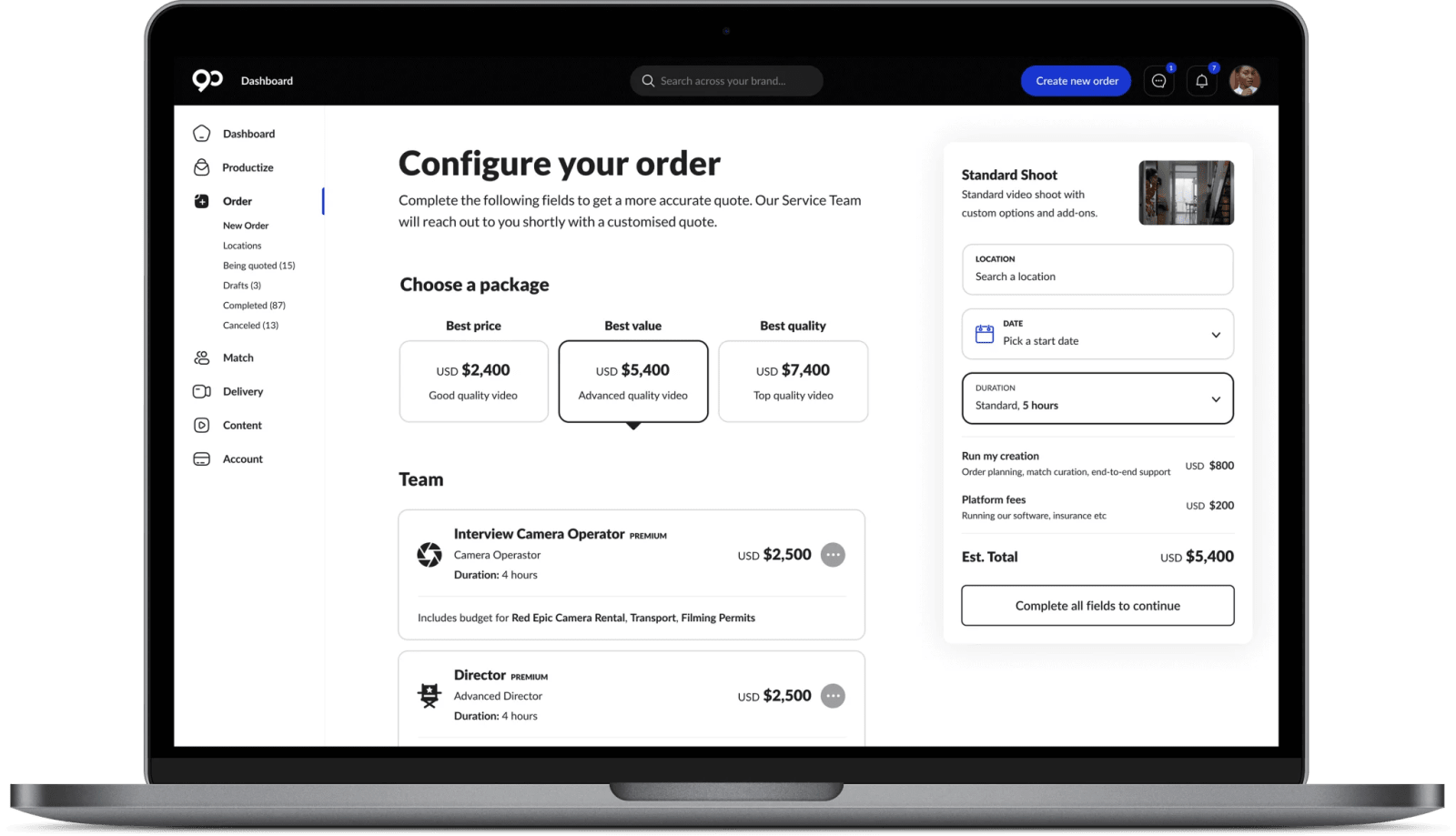
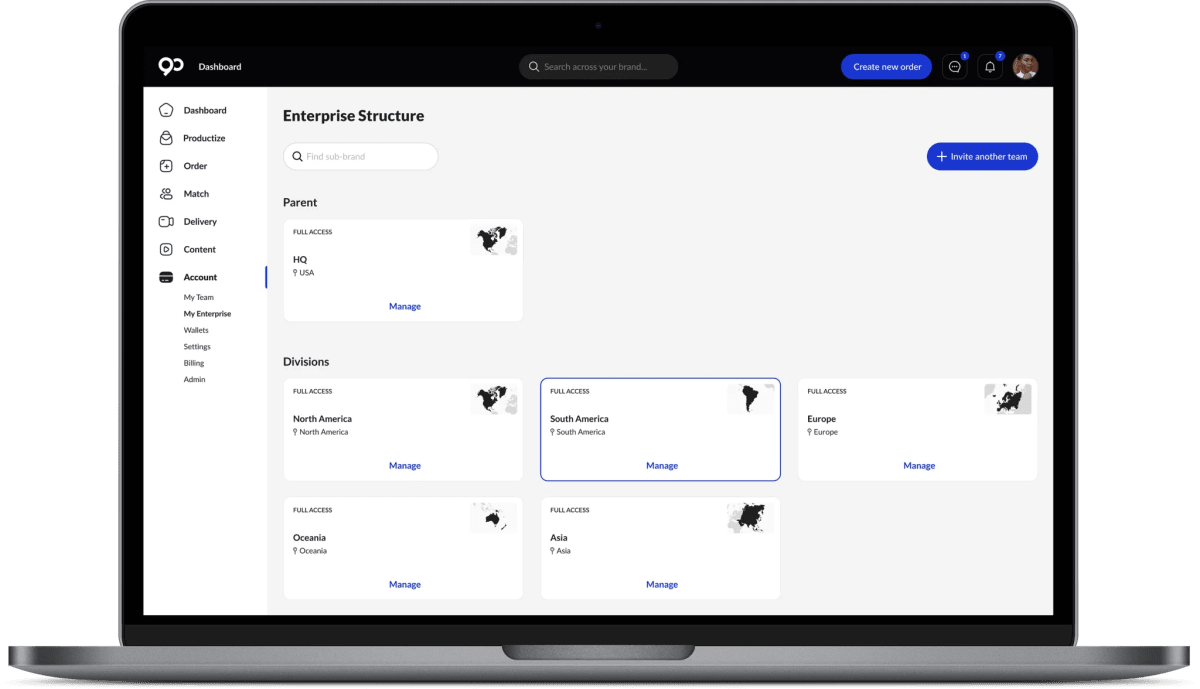
The Brand Account structure is designed for enterprise governance. Parent Brand and Sub Brands, regions and departments, access controls, and budget oversight, so you can see who ordered what, where, and at what price. Transparent pricing replaces market-by-market variance with consistent rates you can defend to procurement, and Productize templates turn repeat orders, like quarterly customer stories or regional product updates, into standardised packages your teams can order without re-briefing from scratch. Built-in analytics give you the spend and output reporting that used to take days of spreadsheet work.
This is the model HP chose when it consolidated 12 regional vendors into 1 platform. Over 13 years, 90 Seconds has delivered 50,000+ videos and 25,000+ shoots for 4,500+ brands, including Cisco, Microsoft, KPMG, Barclays, and Roche.
Stop paying the hidden tax
Vendor sprawl is not a sign your team failed. It is the natural result of scaling video one market at a time. But every quarter you keep the patchwork, you pay the hidden tax in reporting hours, pricing leakage, and brand drift.
Run the audit. Quantify the variance. Then pilot a consolidated alternative and let the data decide. Get started with 90 Seconds

90 Seconds
Content Team