Brand consistency at global scale: One brand, every market

You send the same brief to three markets. Three videos come back. One nails the brand, one is close but the colour grade and pacing feel like a different company, and one looks like it was made for someone else entirely. Now your team is in cleanup mode, again, and the campaign deadline has not moved.
Brand consistency is easy to maintain when one studio shoots everything. It breaks the moment video scales beyond what your core team can physically produce. The question is not whether your brand will drift as you grow into new markets. It is whether you have a system that catches the drift before it ships.
Why consistency breaks at scale
Brand drift in video is rarely caused by carelessness. It is structural, and it has 3 root causes.
Interpretation multiplies with every new pair of hands. Brand guidelines are written documents; video is a thousand judgement calls about framing, lighting, music, pacing, and tone. Every new vendor, crew, or regional team interprets those calls slightly differently. Ten interpreters, ten interpretations.
Briefs decay as they travel. The brief that leaves headquarters is not the brief the local crew hears. It passes through a regional marketer, a local vendor's producer, then a crew on the day. Each handoff strips context. By the third handoff, "confident but warm" has become whatever the editor thinks it means.
There is no feedback loop. Most global teams only see regional video after it is finished, or worse, after it is published. Without structured review points during creation, the first chance to correct course is also the most expensive one.
The cost is real. Inconsistent video weakens the compounding effect that makes brand investment pay off, confuses customers who experience your brand across borders, and burns internal trust: once stakeholders see off-brand work, every future regional video gets second-guessed.
A governance framework: 3 pillars
Strong brand governance for video does not mean centralising every shoot. It means building 3 pillars so distributed teams can move fast inside guardrails.
Pillar 1: Templates, not just guidelines
A 60-page brand book does not survive contact with a shoot day. Turn your most repeated video types, customer stories, product explainers, event recaps, into productised templates: locked structure, defined shot lists, approved music and graphics, set deliverable formats. A template removes hundreds of judgement calls before the camera rolls. Guidelines tell people what good looks like; templates make good the default.
Pillar 2: Approval workflows with named gates
Consistency needs checkpoints, not heroics. Define who reviews what, and when: brief approval before production starts, a review at first cut, brand sign-off before delivery. Put the workflow in a platform rather than an email thread, so versions, feedback, and approvals are tracked and nothing ships unreviewed. The goal is 2 or 3 fast, structured gates, not an open-ended comment pile.
Pillar 3: Vetted creators who already know the bar
The single biggest variable in consistency is who does the work. A network of vetted professionals, matched to your project by skills and track record, and briefed through the same workflow every time, removes the lottery of finding a new crew in every market. The third video from the same trusted bench will always beat the first video from a stranger.


Key challenges
Speed versus control. Tighten governance too far and regional teams route around it, briefing their own people and producing exactly the off-brand work you feared. The fix is making the governed path the fastest path.
Local relevance. Consistency is not uniformity. A video for Tokyo should feel local while remaining unmistakably yours. Templates must define what is fixed and what flexes.
Volume growth. Most enterprises need more video every year, across more markets and channels. A governance model that depends on one central team reviewing everything will not survive the volume.
Proving it. Without analytics on what was produced, where, and how it performed, brand teams cannot show the value of governance, and the budget conversation gets harder.
How 90 Seconds supports global brand consistency
90 Seconds is a global video creation platform built to be your studio, everywhere. The same brief, the same standard, executed locally in 110+ countries and 1,500+ cities through 14,000+ Creator Partners: vetted video professionals matched to your project by skills, location, and past work.
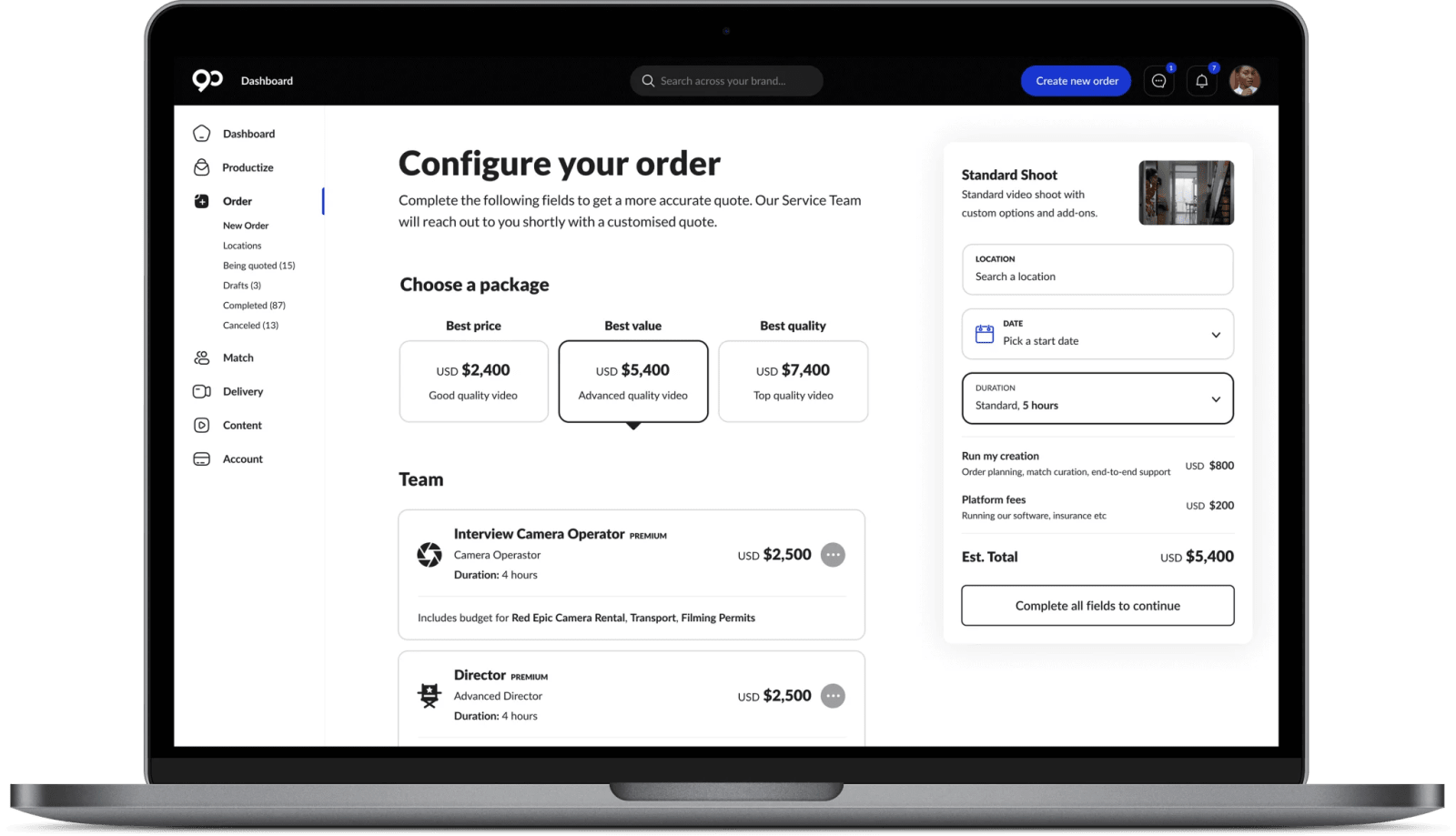
The framework above maps directly onto the platform. Productize turns your repeat formats into ordered templates, so a customer story shot in Singapore follows the same structure as one shot in Stockholm. Approval workflows, version control, and managed feedback are built in, so every review gate is tracked rather than buried in email. And every project is guided by a Concierge, a dedicated service manager who carries your brand standard into each shoot so it never decays in the handoffs.
For the work itself, 90 Seconds Content Solutions cover the formats global brands repeat most. Company Stories bring your brand narrative to life consistently across regions, and Advertising delivers campaign content built to one creative standard in every market it runs. Transparent pricing keeps rates consistent across markets, and analytics give brand teams a single view of what was created, where, and by whom.
This is how Cisco extended its studio to 40 markets, and why brands like KPMG, HP, Microsoft, Deloitte, and HSBC create with 90 Seconds. Across 13 years, the platform has delivered 50,000+ videos for 4,500+ brands.
One brand, every market
Brand drift is not a talent problem. It is a systems problem, and systems problems have systems answers: templates that make good the default, workflows that catch drift early, and a vetted network that already knows your bar.
Pick your 3 most repeated video formats, template them, and run them through one governed platform in your next 2 markets. Then compare the results with your last regional round. Get started with 90 Seconds

90 Seconds
Content Team