AI-assisted video creation without losing authenticity

You're under board-level pressure to adopt AI in your content operation, and equally clear-eyed about the brand risk of getting it wrong. One uncanny AI avatar in a customer-facing video can undo years of brand trust. So the real question isn't "should we use AI for video". It's "where does AI make us faster, and where does it make us fake".
AI-assisted video creation means using AI where it genuinely excels, scripting, editing, voiceover, format adaptation, while real people film real stories in real places. The distinction matters more in 2026 than ever, because both the tools and the audience's detector for synthetic content are improving monthly.
Why this matters now
Generative AI has made parts of video creation dramatically faster and cheaper. Text-to-video, AI voiceover, automated subtitles, and generative b-roll are real capabilities, not demos. A task that took an editor 2 days in 2023 can take 2 hours today.
But AI hasn't replaced the need for real-world production, and audiences are moving the other way. Viewers increasingly reward authentic, real-world content over hyper-produced or synthetic video. Customer stories, behind-the-scenes footage, and real locations perform better because they feel trustworthy.
That creates the enterprise dilemma. Skip AI and your content output falls behind teams shipping 5x your volume. Go AI-only and your content starts to feel synthetic exactly when audiences are prizing authenticity. The answer isn't picking a side. It's knowing which jobs belong to which.
A framework: What AI does, what only humans can do
Where AI excels
Scripts and story development. AI drafts script options, structures narratives, and adapts tone in minutes. A human still decides what's true and what's on-brand, but the blank page disappears.
Editing and adaptation. Rough cuts, subtitle generation, and reformatting one hero video into 10 channel-specific versions. This is where most enterprise video budgets leak, and where AI saves the most.
Voiceover and localisation. AI voiceover makes a 12-language rollout a configuration choice instead of a 6-week booking exercise.
Versioning at volume. Aspect ratios, lengths, captions, and regional variants. Mechanical work that machines should do.
What AI cannot fake
A genuine customer testimonial. The entire value of a testimonial is that a real person chose to say it. Synthesise it and you haven't saved money, you've destroyed the asset.
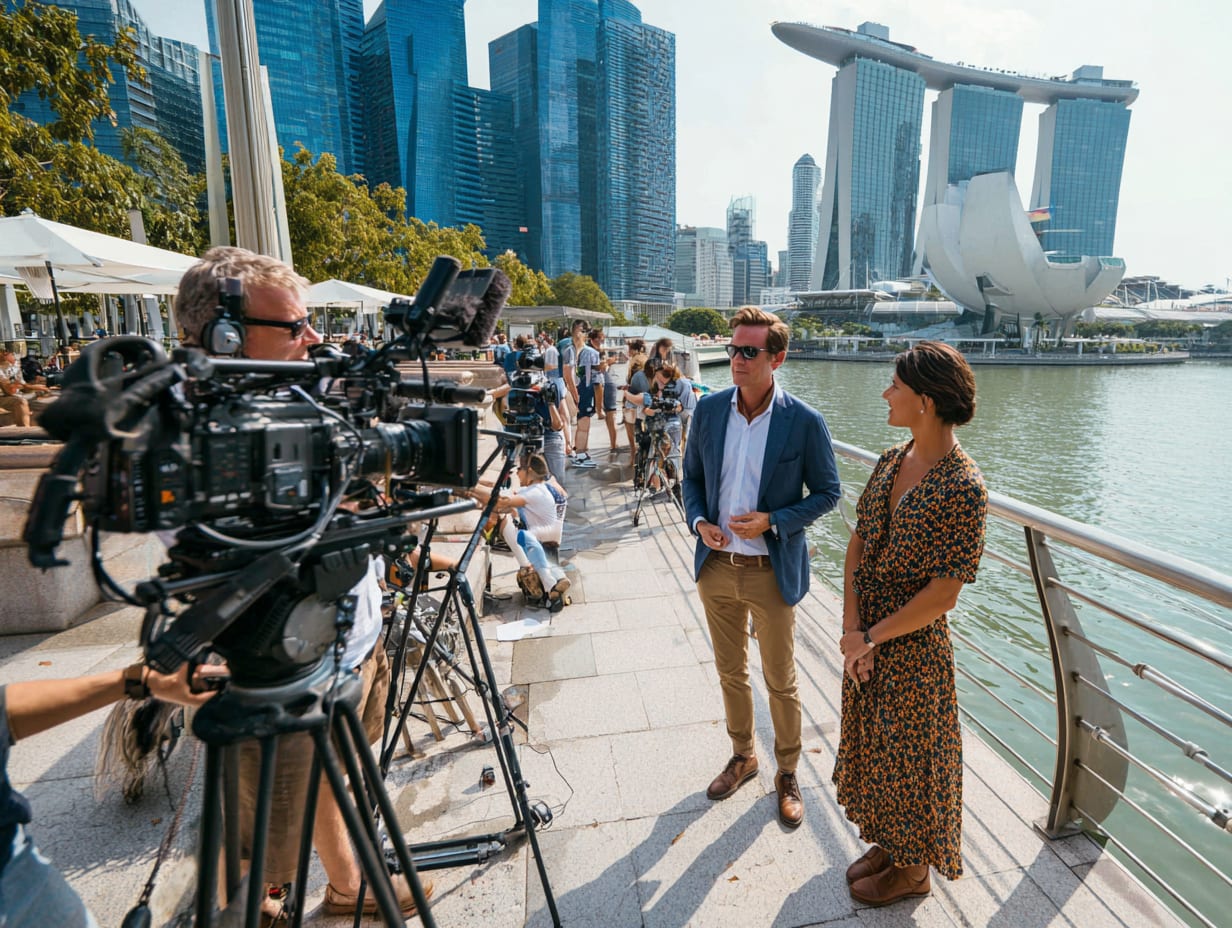
A factory tour, a real location, a real product. Buyers doing due diligence want to see the actual facility, the actual team, the actual thing.
A CEO's authenticity on camera. Leadership communication works because of presence and accountability. An avatar of your CEO communicates the opposite.
The operating model: AI-enhanced, human-delivered
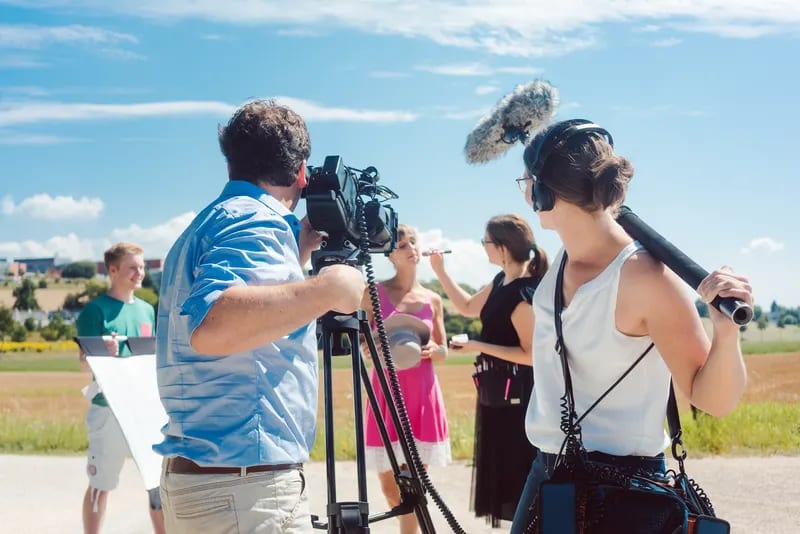
The teams getting this right run one workflow, not two camps. AI accelerates planning and post-production. Humans capture everything that has to be real. And critically, professional creators quality-control the AI output before it ships, so efficiency never comes at the price of a synthetic-looking brand.

Key challenges
Enterprises adopting AI video run into 4 recurring issues:
Tool sprawl. One team subscribes to a script tool, another to a voiceover tool, a third experiments with text-to-video. Nothing composes into a workflow, and nobody owns quality.
No quality control layer. Raw AI output is fast but uneven. Without a professional reviewing every asset, the misses reach customers.
Brand and legal risk. Voice cloning consent, likeness rights, and disclosure rules vary by market. Ad-hoc AI use creates exposure that procurement and legal will eventually find.
The authenticity ceiling. Teams that lean too hard on generation discover their content library is full of footage of nothing. No customers, no facilities, no people. There's nothing real left to show.
How 90 Seconds supports AI-assisted video creation
90 Seconds is a global video creation platform positioned exactly at this intersection: AI efficiency where AI excels, plus a human production network for everything that requires real people, real places, and real stories. Over 13 years we've delivered 50,000+ videos and 25,000+ shoots for 4,500+ brands, including Microsoft, HP, Deloitte, and Roche.
AI services, delivered with quality control. Our AI Assisted Script Development, AI Assisted Rapid Edit, and AI Assisted Voiceover services put AI to work on the tasks above, delivered through Creator Partners, our network of 14,000+ vetted video professionals, who quality-control every output. You get the speed without the synthetic feel.
Real shoots for what AI can't fake. When the brief calls for a customer on camera, a facility walkthrough, or an executive who needs to look like a human being, we match a local crew from 110+ countries and 1,500+ cities. Real footage, captured wherever the story actually is.
One workflow, not five subscriptions. Ordering, matching, delivery, review, and asset storage live in one platform, so AI-assisted and shot content move through the same pipeline with the same governance.
Productize what repeats. Recurring formats, such as a monthly product update with AI Assisted Rapid Edit, become Productize templates your team reorders in clicks, with transparent pricing on every order.
Concierge support. Every project is guided by a Concierge, a dedicated service manager who scopes where AI fits your brief and where it doesn't, so you're never guessing at the boundary. Analytics show what you're producing, spending, and shipping across both.
AI is the multiplier, not the message
AI doesn't replace creativity. It multiplies it. The enterprises winning with video in 2026 use AI to ship more, faster, and spend the savings on the things machines can't do: real customers, real places, real people on camera. That's the model: AI-enhanced, human-delivered.
If you're building the business case for AI in your video operation, start where the risk is lowest and the leverage is highest.

90 Seconds
Content Team