Mapping video to the B2B buyer journey

You shipped a beautiful brand film last quarter. It got compliments, a spike of views, and then silence in the pipeline. The problem is not the film. The problem is that one video cannot carry a buying committee that averages around 11 stakeholders through a journey that takes months.
A buyer journey video plan works differently. Instead of asking "what video should we make next?", it asks "who is stuck at which stage, and what do they need to see to move?". This post maps video formats to each stage of the B2B buyer journey so you can plan a program, not a one-off.
Why video matters across the journey, not just at the top
Most B2B teams treat video as an awareness tactic. That made sense when video was expensive and rare. It no longer is, and buyers have changed with it. They self-educate through content long before they talk to sales, and they keep consuming content after they buy.
Three realities make journey-mapped video the stronger play in 2026:
Buying committees are large and varied. With roughly 11 stakeholders on an average enterprise deal, your champion, their CFO, the end users, and procurement all need different evidence. One hero film cannot speak to all of them.
Stages have different questions. At awareness the question is "is this problem worth solving?". At decision it is "will this work for a company like ours?". A format built for one question fails at the other.
Video compounds when it is planned. A library mapped to the funnel gets reused by sales, customer success, and regional teams. A one-off campaign film gets archived.
The shift is from video as a creative event to video as infrastructure for the journey.
The four-stage framework
Here is a practical way to map formats to stages. Each stage pairs a buyer question with the video formats that answer it best.
Stage 1: Awareness. Earn attention and credibility
The buyer is naming their problem and deciding whose perspective to trust. They are not evaluating vendors yet, so product content is wasted here. What works is people with a point of view.
Webinars put your experts in front of an audience that opted in to learn. They build authority and capture top-funnel intent in one motion.
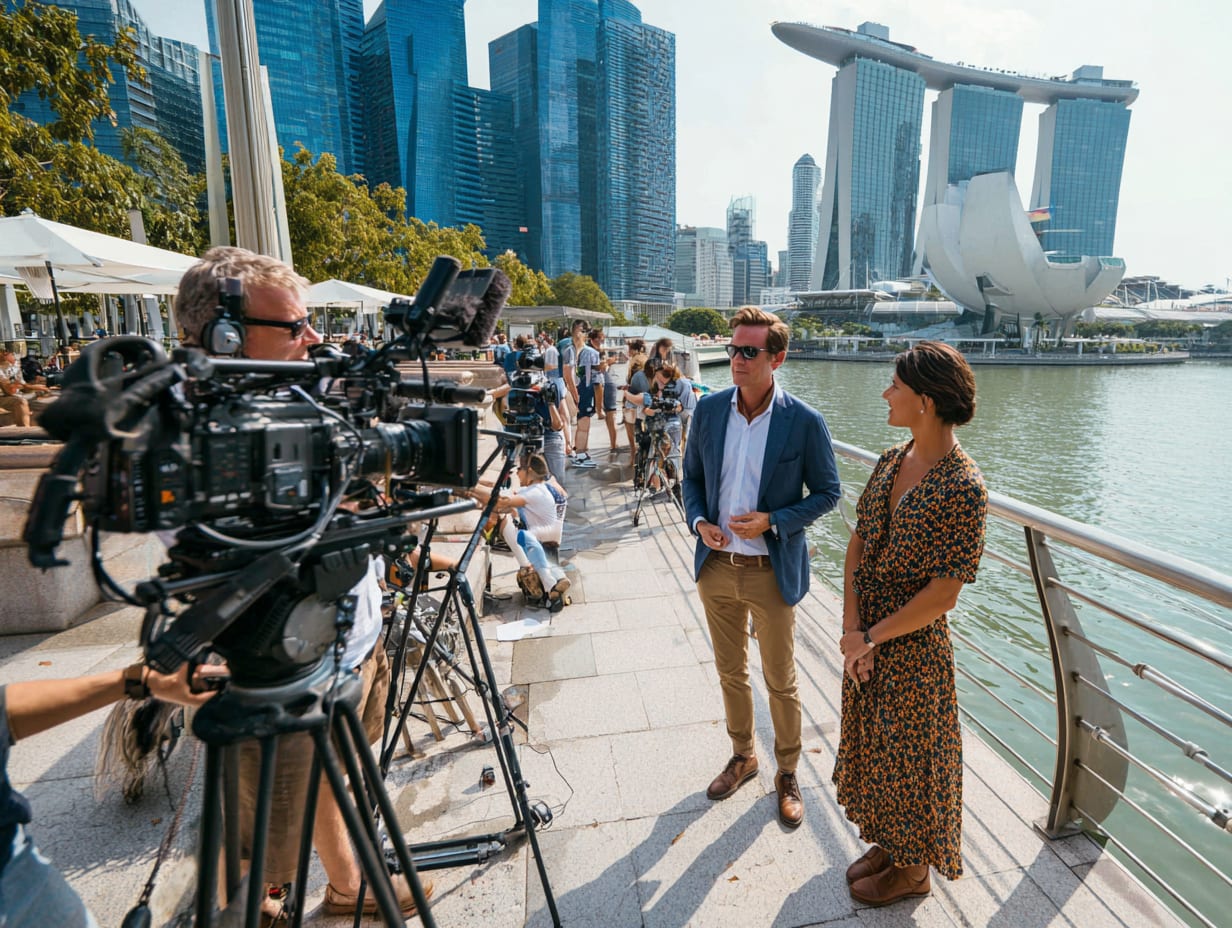
Fireside Chats trade polish for candour. A relaxed conversation between your leader and a customer or industry voice earns trust that scripted content cannot.
The goal at this stage is simple: when the buyer eventually shortlists, your brand is already a familiar, credible voice.
Stage 2: Consideration. Explain clearly
The buyer now knows the problem and is comparing approaches. The question shifts to "how does this actually work?". Clarity beats charisma here.
Explainer Animation compresses a complex concept into 60 to 90 seconds. It is the format buyers forward to colleagues who were not in the first meeting.
Product Demo shows the thing doing the thing. A tight, honest demo answers more objections than 3 sales calls.
A useful test: could a champion show this video to their boss without you in the room? Consideration content exists to make your champion's internal pitch easier.
Stage 3: Decision. Prove it
The committee is close to choosing and looking for reasons to feel safe. Risk reduction is the job, and nothing reduces perceived risk like a peer saying it worked.
Customer Stories put a real customer on camera describing the before and after. They carry the emotional weight a written reference cannot.
Case Studies in video form add the numbers: the timeline, the outcomes, the measurable result. Pair the two and you cover both the heart and the spreadsheet.
Match the story to the buyer where you can. A financial services prospect wants to see a financial services customer, ideally in their region.
Stage 4: Retention. Help customers succeed
The journey does not end at signature. Customers who learn the product faster renew more often and expand sooner, and video is the cheapest way to teach at scale.
Tutorials turn your documentation into a library people actually watch.
Help & How-To content deflects support tickets and shortens onboarding.
Retention video is the most neglected quadrant of the funnel and often the highest ROI, because the audience is already paying you.
Key challenges
Journey-mapped video plans fail in predictable ways. Watch for these 4:
Budgeting for one film instead of a program. A single hero film can consume a quarter's budget and serve one stage. Spreading the same budget across 6 to 8 formats covers the whole journey.
Producing in one market for a global committee. Stakeholders sit in different regions. A US-only customer story does less for a buying group split across Singapore, London, and Sydney.
No repeatable production path. If every video is a bespoke project with new vendors, the plan stalls after the second format. Repeatability is what makes a program survivable.
Measuring views instead of movement. The metric that matters is whether deals progress after exposure to stage-matched content, not raw view counts.
How 90 Seconds supports buyer journey video
90 Seconds is a global video creation platform built for exactly this kind of program. Each format above maps to a Content Solution you can order directly: Webinars and Fireside Chats for awareness, Explainer Animation and Product Demo for consideration, Customer Stories and Case Studies for decision, and Tutorials and Help & How-To for retention.
The platform handles the operational weight that usually kills full-funnel plans:
14,000+ Creator Partners, vetted video professionals in our global network, across 160+ countries and 1,500+ cities. Shoot a customer story in Tokyo and a demo in Austin through one platform.
Productize templates turn repeat orders into a repeatable workflow. Once your customer story format is defined, the next 10 are orders, not projects.
Concierge support: a Concierge is a dedicated service manager who guides you through every step of creation, from brief to final delivery.
Transparent pricing so you can plan a quarter of journey content against a known budget, with analytics to show which stage content is moving deals.
It is the model behind 50,000+ videos and 25,000+ shoots delivered for 4,500+ brands over 13 years, including HP, Cisco, Microsoft, and Barclays.
Plan the journey, then the videos
The strongest B2B video strategy in 2026 is not a bigger hero film. It is a mapped plan: one or two formats per stage, produced repeatably, localised where your committee sits. Start by auditing which stages your current library covers. Most teams find a heavy top and an empty middle, and that gap is where the next deal is stalling.
Ready to build a journey-mapped video program? Get started with 90 Seconds

90 Seconds
Content Team